
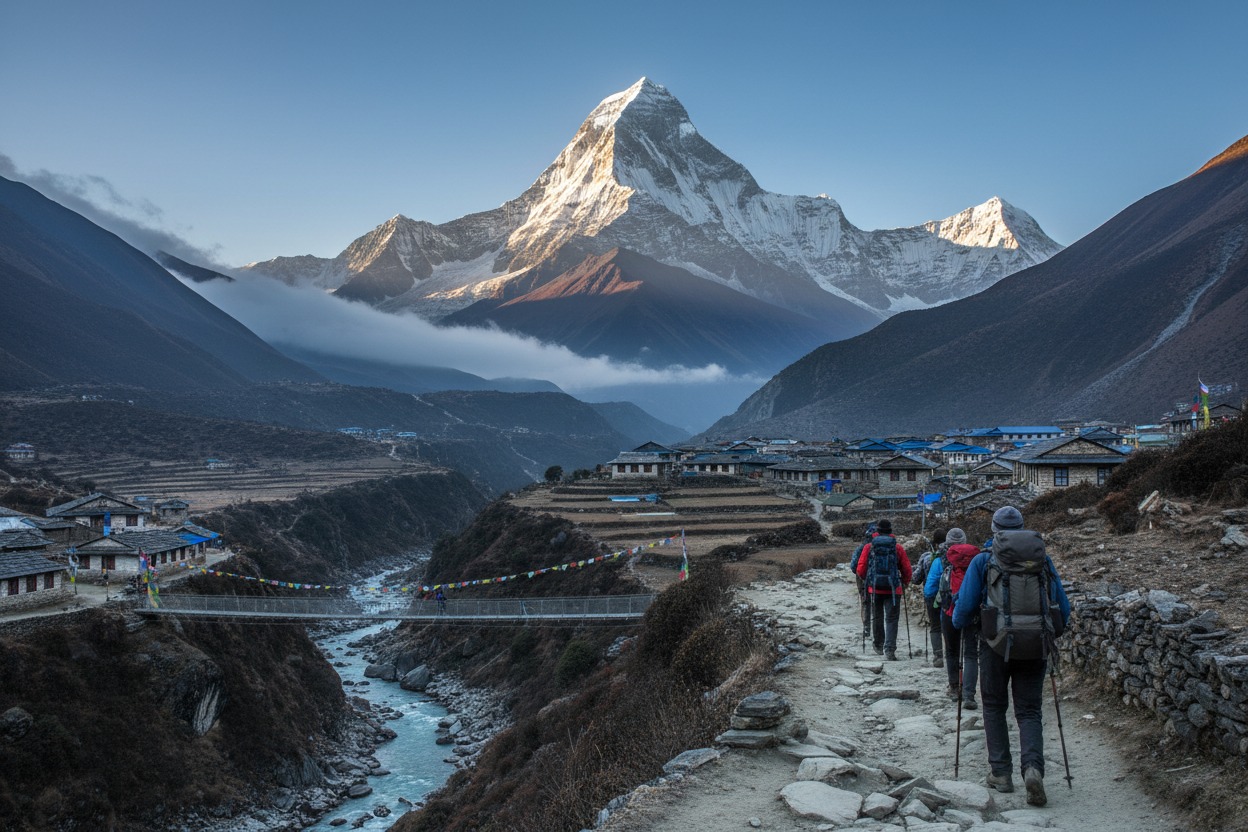
One of the most common concerns among first-time trekkers heading to destinations such as Everest Base Camp, Annapurna Base Camp, or Kilimanjaro is altitude.
Altitude affects everyone differently. Fitness alone does not determine how your body will respond. Even experienced athletes can experience symptoms when ascending too quickly.
As elevation increases, the amount of oxygen available to the body decreases. This can lead to symptoms such as headaches, fatigue, loss of appetite, and difficulty sleeping.
The good news is that proper acclimatization significantly reduces the risk of altitude-related issues.
The key principles are simple:
- Ascend gradually.
- Stay hydrated.
- Eat well.
- Listen to your body.
- Never ignore symptoms.
This is why well-designed itineraries include acclimatization days and allow trekkers sufficient time to adjust to the environment.
Perhaps the most important lesson is this: reaching high altitude is not a race.
Those who move slowly and consistently are often the ones who succeed.
Understanding altitude before your expedition helps you approach the adventure with confidence and realistic expectations.
With the right preparation and guidance, high-altitude trekking can be one of the most rewarding experiences in the world.
~Nirmal Wijesinghe